World Energy Council Austria and Germany: Embassy Energy Talks at the German Embassy in Vienna
09.04.26 - 09.04.2026
Embassy of the Federal Republic of Germany
Metternichgasse 3, 1030 Vienna
Entrance Jaurèsgasse
 Europe
Member Events
Europe
Member Events
Embassy Energy Talks at the German Embassy in Vienna
Organised by World Energy Council Austria and World Energy Council Germany
On Thursday, 9 April 2026, from 5:30 pm at the Embassy of the Federal Republic of Germany, Metternichgasse 3, 1030 Vienna, Entrance Jaurèsgasse.
"Energy costs versus competitiveness in the industrial locations of Germany and Austria"
The economic situation in Germany and Austria remains tense at the beginning of 2026, but is showing the first signs of a slow recovery after a prolonged period of weakness. The two countries are closely intertwined economically and want to strengthen the competitiveness of their locations. High energy costs are considered an obstacle on the way there. So what is to be done?
Agenda
Welcome: H.E. Ambassador Vito Cecere
Introduction: Dr. Michael Strugl, President of the World Energy Council Austria
Panelists:
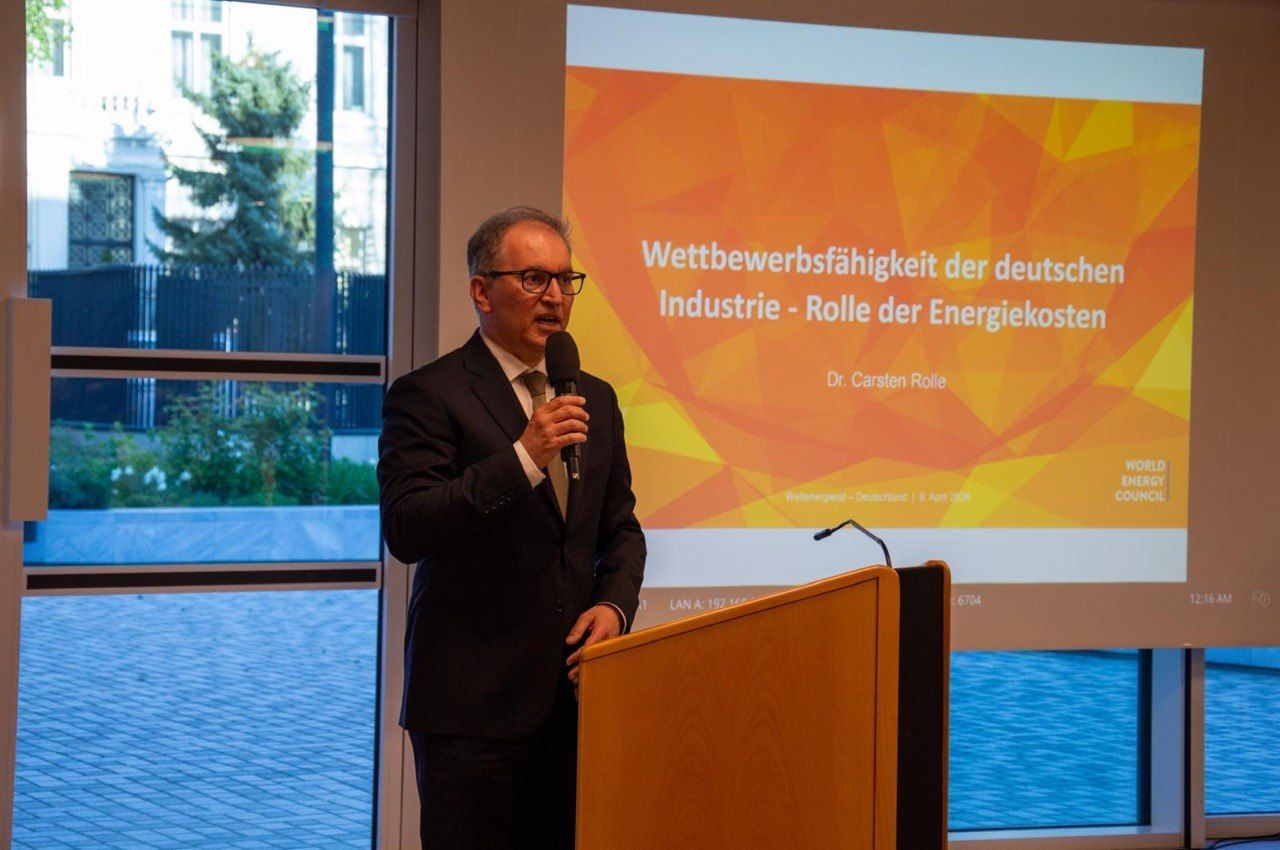
- Dr. Carsten Rolle, Co-Head of Energy, Mobility and Environment, Federation of German Industries / Managing Director WEC Germany
- Dr. Bernhard Langhammer, Spokesperson ChemDelta Bavaria / Chemiedreieck Bayern
- Sigrid Eckhardt, Managing Director of the Austrian Paper Industry
- Dipl.-Ing. Georg Feith, Managing Director of Cornelius Grupp Industrie-Holding
Moderation: Dipl.-Ing. Mag. Gerhard Gamperl, Managing Director of the World Energy Council Austria
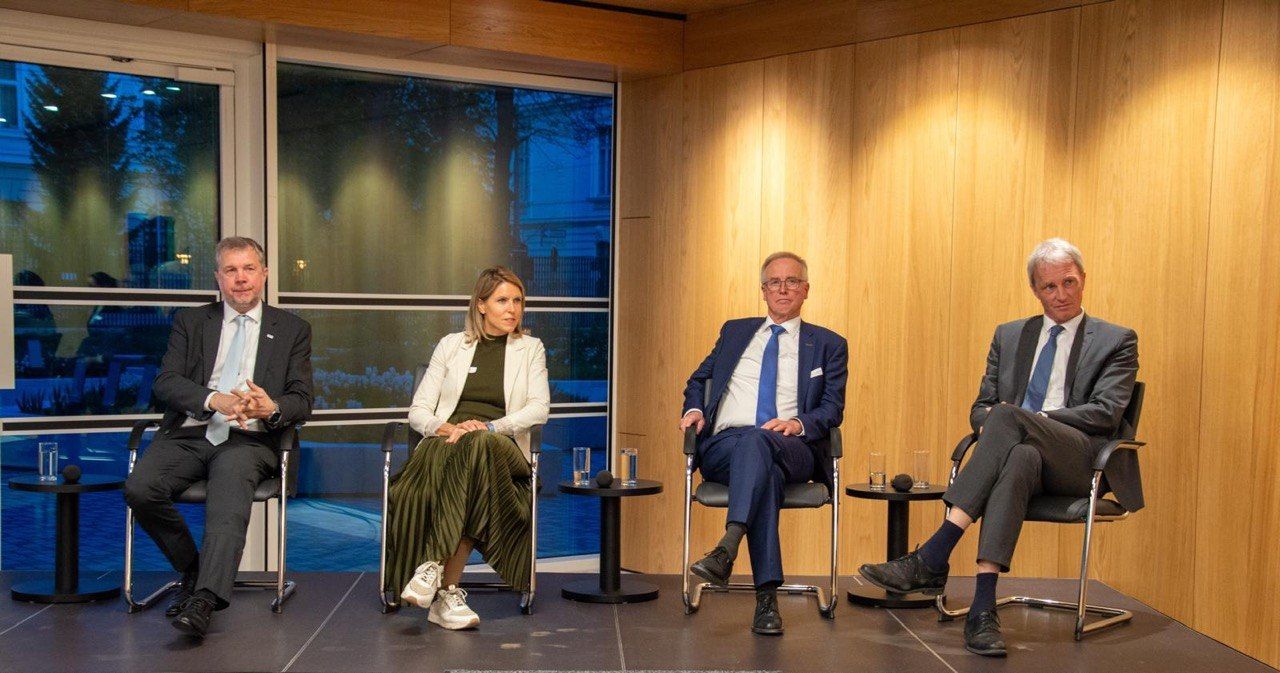
This event is organised in cooperation with the Embassy of the Federal Republic of Germany in Vienna and the World Energy Council Austria.
Overview
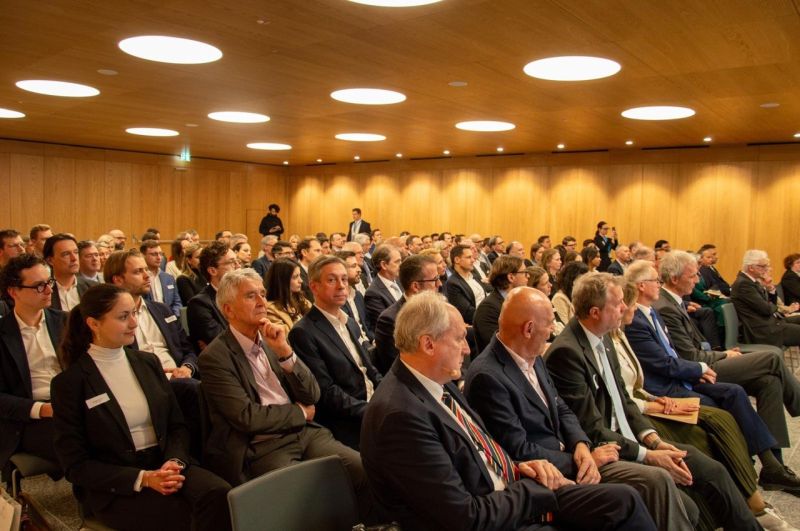
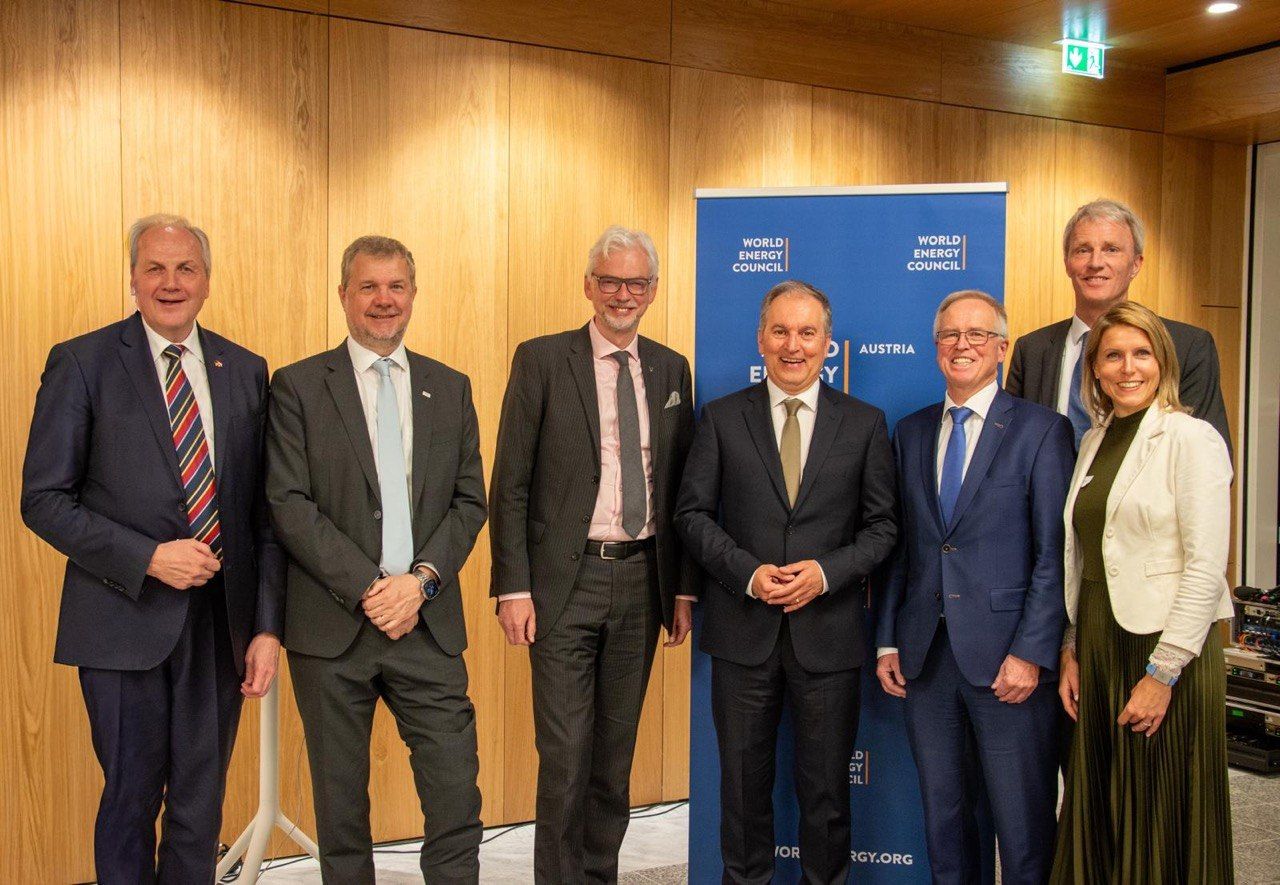
The World Energy Council Austria had the honour of hosting an Embassy Energy Talk at the new building of the German Embassy in Vienna. The event focused on the highly topical issue of “Energy costs versus competitiveness at industrial locations in Germany and Austria.” Against the backdrop of a tense economic situation, leading representatives from industry, the energy sector, and politics came together to discuss key challenges and possible solutions. Special thanks go to H.E. Ambassador Vito Cecere for his generous hospitality at the German Embassy and for his opening remarks. Following the welcome and introduction by Dr. Michael Strugl, the panel discussion, moderated by Gerhard Gamperl, launched a multifaceted exchange on how the competitiveness of both countries can be sustainably strengthened despite high energy costs.
Already in the introduction, the fundamental question regarding the future of the European Union’s export-oriented economic system was raised. The practical challenges of full autarky were addressed. Rather than autarky, open markets, reliable framework conditions, high-quality infrastructure, and secure property rights appear to be decisive for competitiveness, as also emphasised in the Draghi Report.
Dr. Carsten Rolle highlighted the structural challenges of high energy prices from the perspective of German industry and stressed the need for reliable political framework conditions. Dr. Bernhard Langhammer pointed to the extremely demanding conditions for achieving energy neutrality in Germany within the next two decades and made clear the scale of the transformation required for energy-intensive industries.
Mag. Sigrid Eckhardt emphasised that the Austrian paper industry is facing major difficulties in achieving climate neutrality by 2040 under current conditions. At the same time, she underlined the sector’s significant importance for the national economy: roughly every eleventh job in Austria is directly or indirectly linked to this value chain, which is about 90% export-oriented.
Dipl.-Ing. Aleš Prešern drew attention to the growing gap between electricity demand and available energy supply. He emphasised the important role of gas turbines in ensuring supply security and concluded with a cautiously optimistic outlook: if it is possible to build a plant in Europe within a year, then this should also be achievable for key energy infrastructure.
The event made it clear that the situation is serious, but by no means hopeless.
The evening concluded with an engaging Q&A session followed by a networking reception. Once again, it became evident that open dialogue and close cooperation between Germany and Austria, as well as between politics, business, and research, are essential building blocks for a future-proof, competitive, and sustainable energy and industrial landscape. A sincere thank you to all participants for this valuable exchange.