World Energy Council Chile: Energy Forum: 100 First Days of President Kast’s Government
09.07.26 - 09.07.2026
Club 50,
Av. El Golf 50, Las Condes
Chile
 Latin America
Member Events
Latin America
Member Events
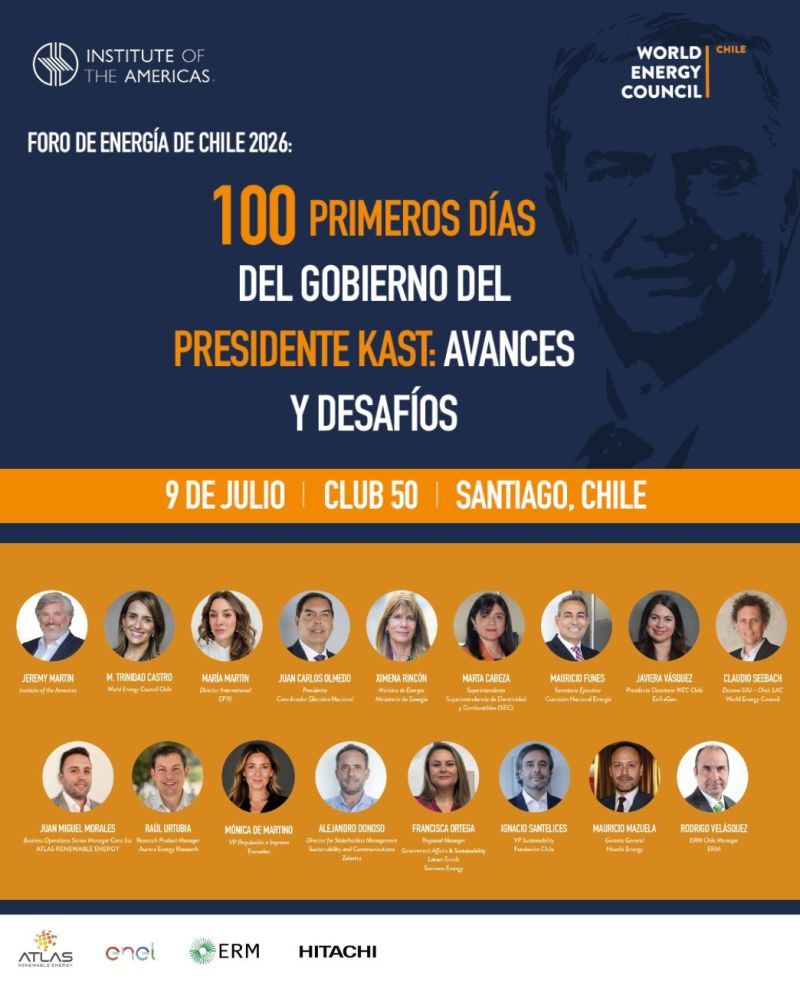
SAVE THE DATE | Energy Forum:
100 first days of President Kast's government: progress and challenges
Organised by World Energy Council Chile and the Institute of the Americas
On Thursday, July 9, from 8:30 a.m. to 1:30 p.m., at Club 50 (Av. El Golf 50, Las Condes).
It will be a space for analysis and dialogue on the direction that the energy policy of the Government of President José Antonio Kast is taking, through an approach based on the World Energy Trilemma.
For more information, please click here.
María Martín, EPRI's International Director and a World Energy Council US board member, will be on stage at the Foro de Energía Chile 2026, in Santiago, opening the regional energy panorama alongside Chile's Minister of Energy, Ximena Rincón.
Convened by World Energy Council Chile and the Institute of the Americas, the forum will examine the first 100 days of President Kast's energy policy through the lens of the World Energy Council Energy Trilemma:
- Security
- Affordability and,
- Sustainability
This kind of cross-regional dialogue makes the World Energy Council and the World Energy Council United States network so valuable: connecting U.S. energy leadership to the global community, sharing what works, learning from one another, and building the relationships that move our shared agenda forward.
Event overview
How do we build an energy system that is safe, accessible, and sustainable at the same time?
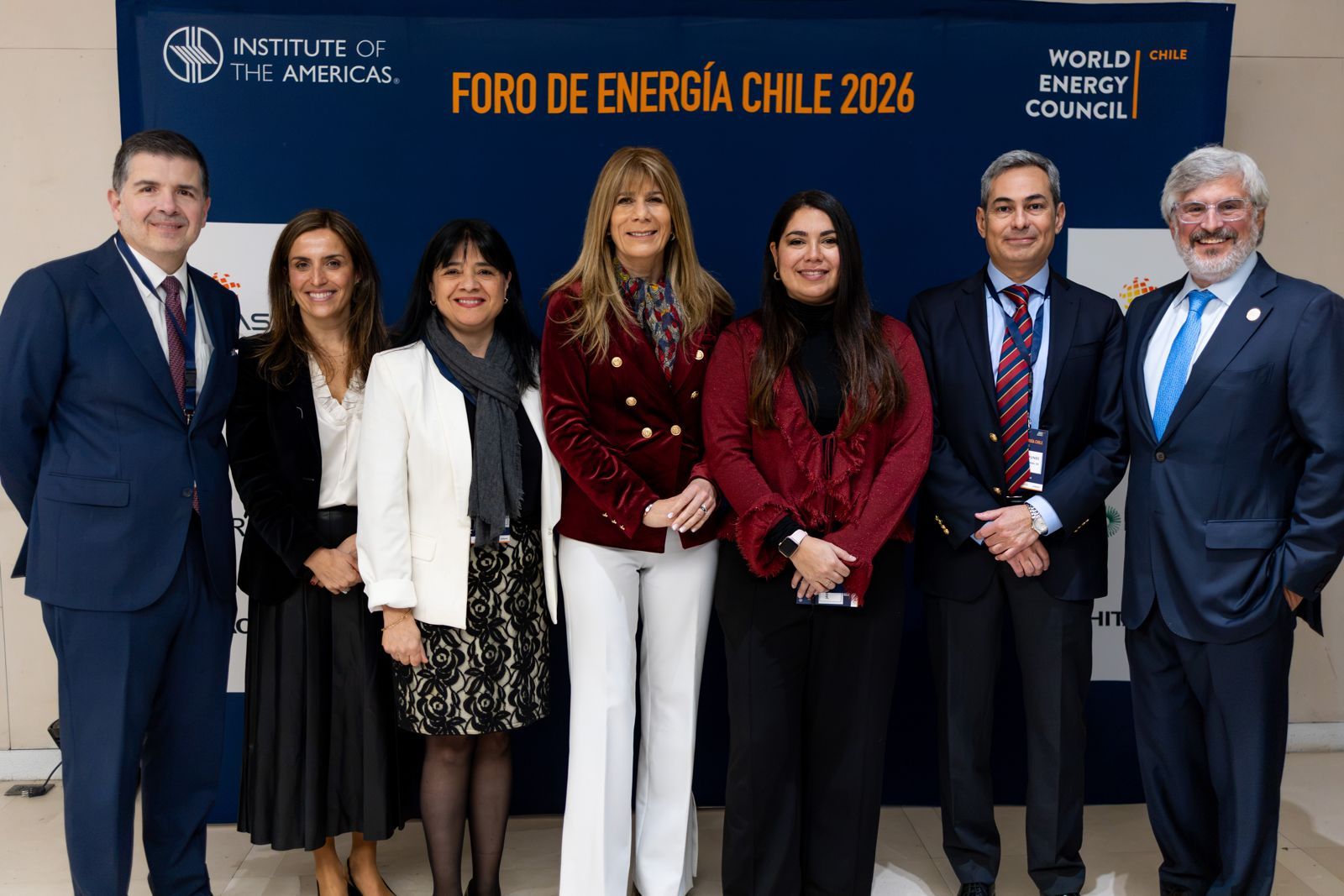
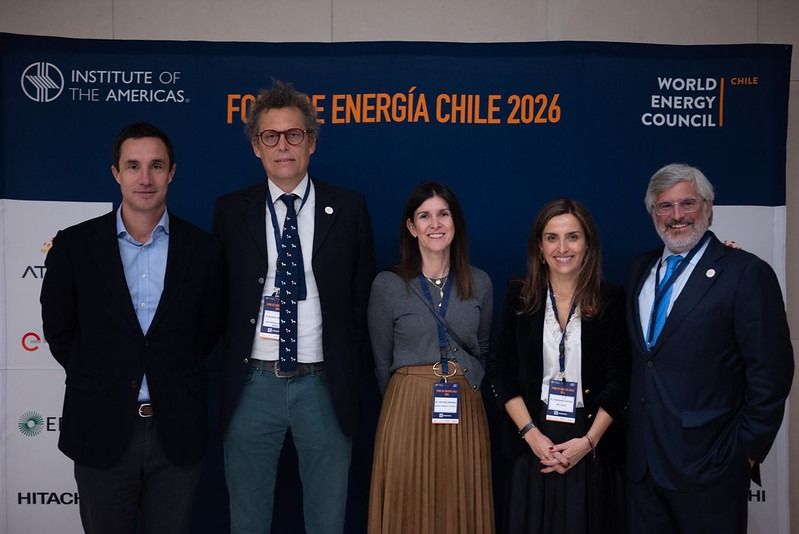
That was the question that marked the 2026 Energy Forum, organised by World Energy Council Chile together with the Institute of the Americas, where authorities, industry leaders, regulators, academia, and experts analyzed the first 100 days of the Government's energy policy from the perspective of the World Energy Trilemma.
At the opening, the Minister of Energy, Ximena Rincón, presented the main guidelines of the Energy Route 2026-2030, reaffirming the commitment to move towards more competitive and fair energy for households, SMEs, and companies. Among his priorities, he highlighted the modernization of the tariff system, the expansion of energy access in rural and isolated areas, the reduction of energy poverty, and the strengthening of self-consumption.
These challenges reflect the three pillars of the World Energy Trilemma: energy security, accessibility, and sustainability, a key balance to guide the decisions that will define the future of the sector.
The international spotlight was led by María Martín, International Director of EPRI, who highlighted the leadership that Chile can exercise thanks to the progress of its electricity matrix. "With 70% of its matrix already clean, Chile has the opportunity, but also the responsibility to show the world how to operate, safely and resiliently, the electricity system of the future," he said.
From a technical perspective, the forum also put on the table the challenges that will define energy development in the coming years: investing in resilience to face the effects of climate change, strengthening the infrastructure necessary to accelerate electromobility, developing storage solutions that give greater flexibility to the system and generating a regulatory environment that provides certainty for investment, with clear and stable rules to advance in the energy transition.
The day concluded with a lunch led by the U.S. Ambassador to Chile, Brandon Judd, an instance that allowed the exchange between authorities, industry representatives, and experts to continue, reaffirming the value of dialogue and cooperation to promote an energy transition that combines competitiveness, security, and sustainability.
Read more about the event here.