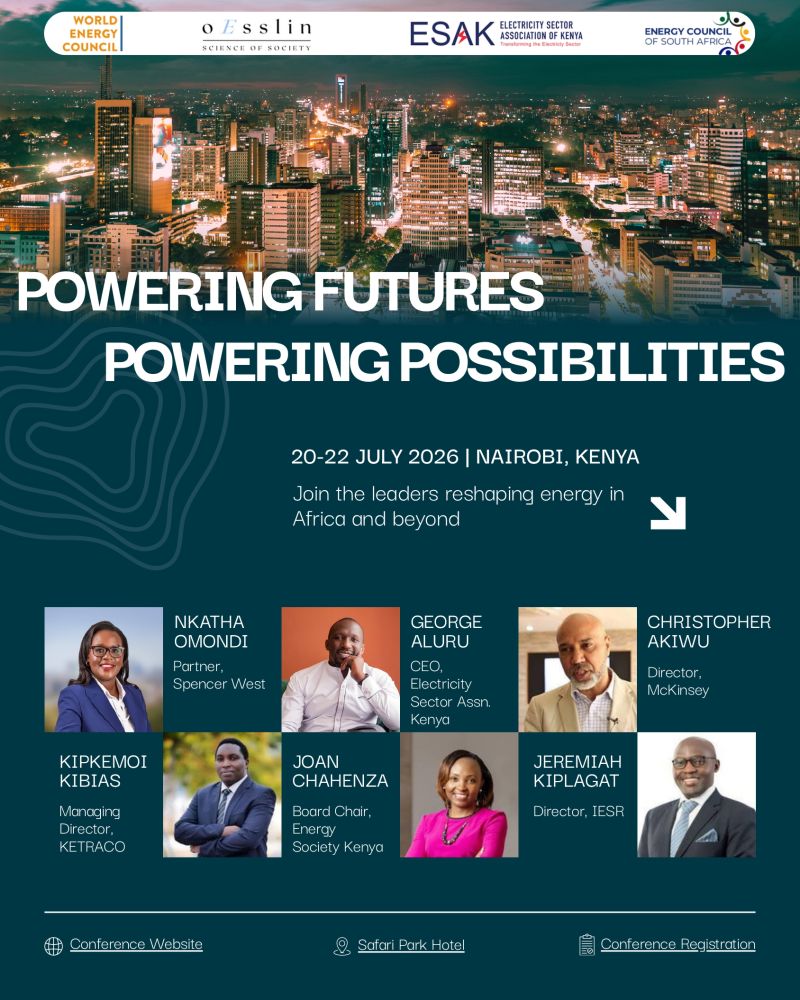
World Energy Council Kenya: Powering Futures 2026 Conference - Nairobi
20.07.26 - 22.07.2026
Nairobi, Kenya
 Africa
Member Events
Africa
Member Events
Conference 2026 - Nairobi
POWERING FUTURES: POWERING POSSIBILITIES
Organised by World Energy Council Kenya and co-hosted by World Energy Council South Africa.
From Monday, 20 to Wednesday, 22 July 2026, in Nairobi, Kenya.
Africa’s energy transition stands at a decisive inflection point, and so does the global market that surrounds it. As the world moves from net-zero pledges to real implementation, Africa is no longer a frontier of potential but a system actor whose choices will shape resilience, competitiveness, and energy security around the world.
The World Energy Council Powering Futures 2026 Conference, creates a results-focused platform that brings together governments, energy leaders, financiers, innovators, and development partners to align renewable-first systems with the policy, capital, and partnerships needed to realise them.
Co-hosted by the Kenya and South Africa Member Committees of the World Energy Council, the conference provides a collaborative space for designing an actionable agenda that connects energy access and equity with industrial competitiveness and global stability. The focus is on implementation, coordination, and system design, ensuring that ideas translate into real progress.
Our work in Nairobi will help establish the foundation of a continental platform for renewable and hydrogen cooperation and inform Africa’s collective contribution to the World Energy Congress in Riyadh. It is a moment to shape solutions that elevate shared opportunity and expand the possibilities of a more secure and resilient global energy future.
Why Attend WEC Powering Futures 2026 Conference?
- Shape real outcomes at a critical moment for energy transformation and implementation.
- Engage directly with global leaders across government, industry, finance, technology, and policy who are driving the next phase of the energy transition.
- Co-create an actionable agenda through high-level plenaries, interactive sessions, and collaborative working groups.
- Access emerging opportunities in renewable-focused systems, hydrogen development, and clean energy value chains.
- Build cross-continental partnerships that connect Africa’s transition with global markets, supply chains, and investment flows.
- Gain early insight into ideas, investment directions, and innovation shaping the 2026 World Energy Congress.
- Expand your network through curated sessions, meaningful conversations, and partnership facilitation.
- Experience Nairobi’s energy — a vibrant hub for innovation, culture, and global collaboration.
For more details, you can visit the website here to see information on the programme, speakers, sponsorship, etc.
To register, please click here.
For social media updates, follow on LinkedIn.
Event overview
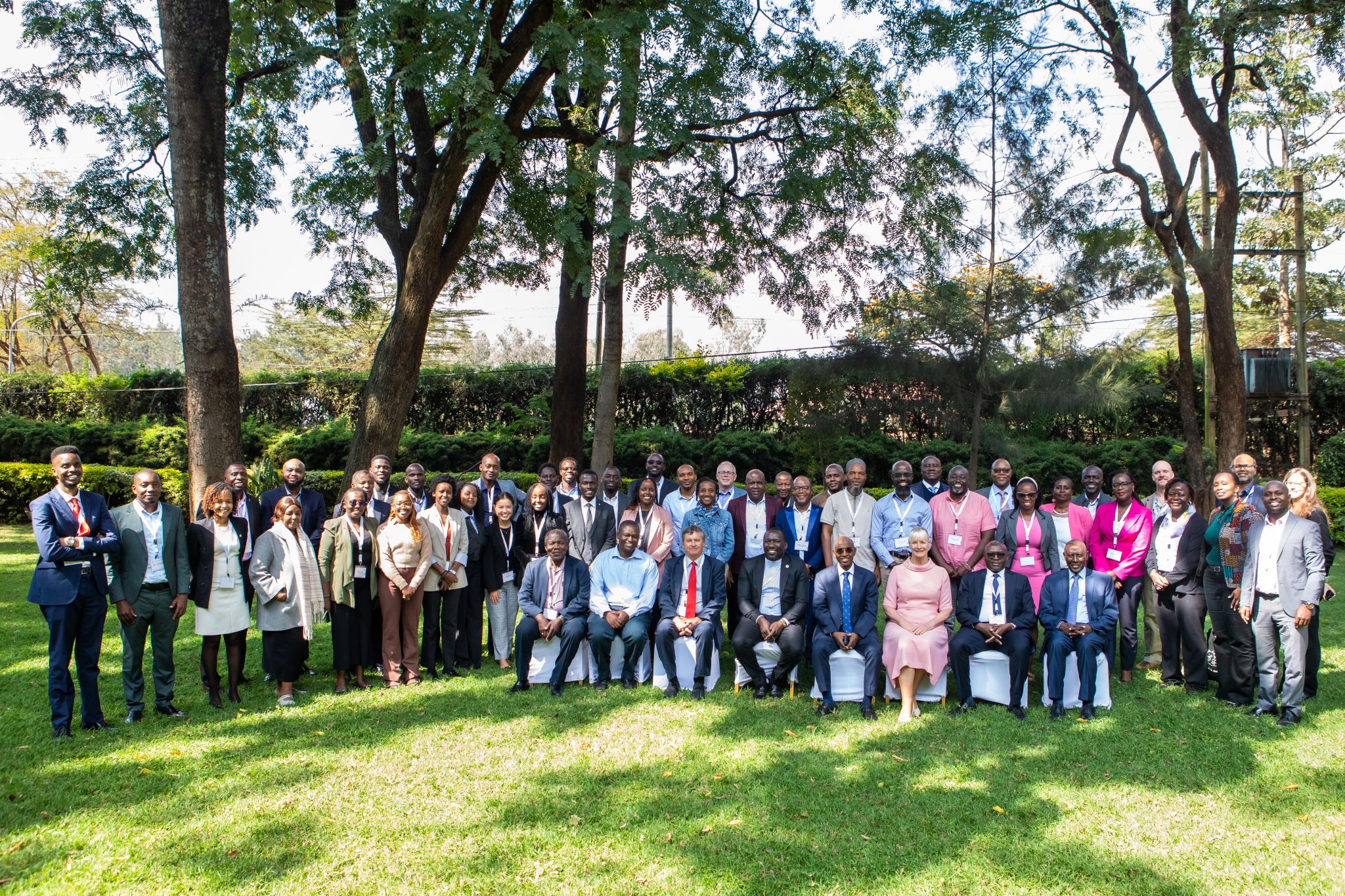
Monday, 20 July
We laid the foundations for a defining conversation on Africa's energy future.
From the Opening Flagship Plenary to discussions on resilient energy systems, industrialisation, and investment, Day One brought together leaders from government, industry, finance, research, and international institutions to examine a fundamental question:
What must Africa build to secure its own energy future, power long-term economic transformation, and strengthen its role in the evolving global energy order?
The conversations reinforced a clear message: Africa's energy future will be shaped not only by the resources it possesses, but by the systems, institutions, partnerships, and leadership it builds.
Tuesday, 21 July
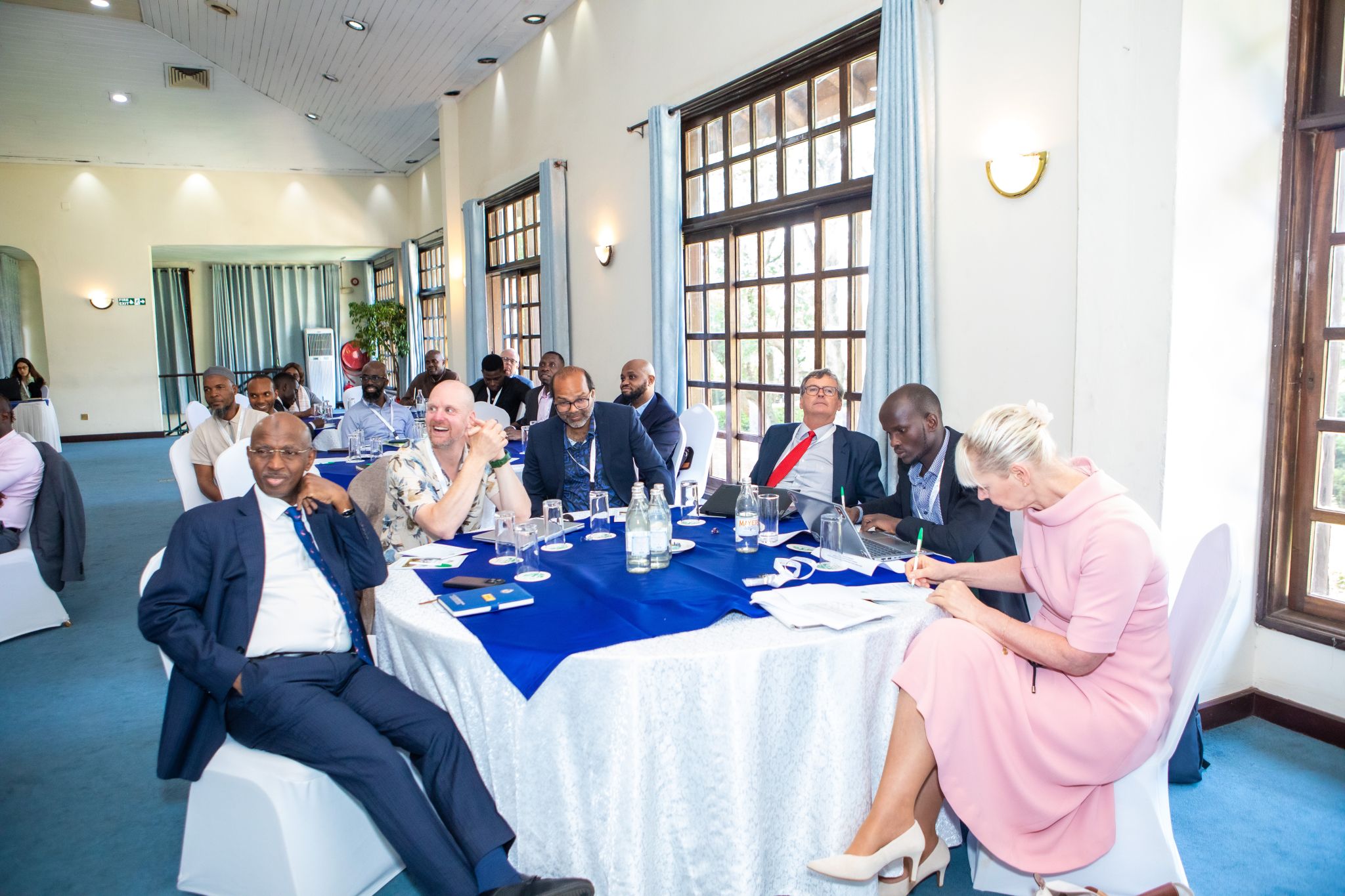
Topics discussed:
- On hydrogen — Africa has the resources, but the real work lies in structuring demand, securing off-take agreements, and building the infrastructure to deliver. As one speaker put it clearly: the decisive metric is not what it costs to produce hydrogen, but what it costs to deliver it to the end user.
- On collaboration — H.E. Dr Omar Farouk Ibrahim challenged private sector actors to rethink ownership structures. Retaining 100% control may protect short-term interests, but sharing equity — even a modest 5–10% stake with local partners — is what builds the trust needed to unlock cross-border cooperation.
- On industrialisation — The message from the private sector was clear: Africa must stop exporting raw materials and start capturing value locally. From green manufacturing to data sovereignty, the opportunity is not just in producing energy — it is in building the industries that energy makes possible.
- On workforce and skills — Kenya's renewable energy share now stands at approximately 90% of generation. But with an ageing workforce, skills mismatches, and rapid technological change, human capital is now the critical frontier. Training, leadership development, and institutional capacity are not soft issues — they are the energy transition.
Wednesday, 22 July

