INTRODUCTION
The World Energy Issues Monitor survey this report is based upon was conducted between 24 November 2025 and 12 January 2026. The consultation with our International Advisory Group and Regional Leadership Exchanges that informed this commentary took place during January and February 2026, prior to the currently escalating situation across the Middle East and Gulf States. The 2026 World Energy Issues Monitor should be understood in this context.
EXECUTIVE SUMMARY
ENERGY TRANSITIONS
Energy transitions rarely move in straight or predictable lines. They bend, stall, accelerate, and adapt. The 2026 World Energy Issues Monitor shows that even before the outbreak of the conflict across the Middle East, the global energy community sees geopolitical threats and uncertainty as the defining feature shaping the energy landscape. The global system is expanding even as it transforms, shaped increasingly by geopolitical and environmental priorities rather than purely economic forces.
SYSTEMS UNDER STRAIN
Across regions, leaders describe energy systems that are changing at a faster pace than their current foundations can support. Energy transitions remain in motion, but are now increasingly shaped by tighter constraints. Geopolitics is weighing heavily on investment and cooperation. Demand pressures are broadening, with new demand centres emerging even as under-estimated energy deficits persist in many places. Visible strain within systems highlights the need for more deliberate pacing and sequencing.
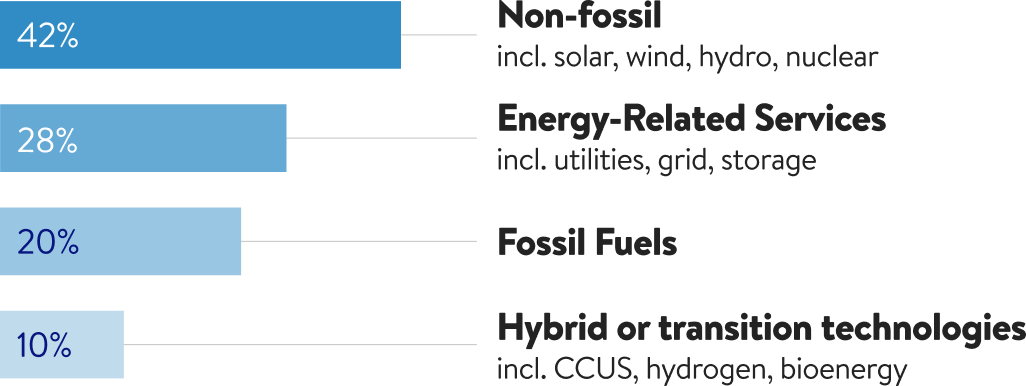
Figure 1. Capturing Diversity: Geographic, Sectoral & Generational Perspectives






ENERGY DEMAND GROWTH
History suggests that when structural drivers align, demand growth can persist for decades. Over the past century, energy expansion was not driven by a single force, but by the compounding effects of population growth, rising incomes, and successive waves of technology adoption. Efficiency gains did not eliminate growth. Today, industrialisation, electrification of end–use, mobility, urbanisation, digitalisation, and AI form a similarly compounding set of forces – reshaping electricity demand even where total primary energy growth moderates.
ENERGY IS THE OPERATING SYSTEM
In this expanding system context, energy is no longer a bounded sector. It now intersects directly with security, industry, finance, digital infrastructure and cities, expanding system boundaries across geographies and technologies. In this context, a supply-side mindset is no longer enough: demand is swiftly becoming one of the fastest–rising uncertainties and remains widely misunderstood.
2026 also marks a shift from pledge-led momentum to Trilemma–tested delivery – linking security, affordability and sustainability in real time.
A MILESTONE YEAR FOR ENERGY TRANSITIONS
2026 marks a milestone moment – a decade since the Paris Agreement and four years from 2030. Some updated Nationally Determined Contributions (NDC 3.0) have been submitted, but collective ambition and implementation remain insufficient to support a 1.5 °C pathway, and progress towards UN Sustainable Development Goal 7 is significantly off–track.
Expectations around delivery credibility are rising. There is a growing focus on how transitions can be delivered under constraint rather than declared in ambition alone.
The 2026 World Energy Issues Monitor captures how leaders experience these pressures – where uncertainty is concentrating, how priorities are shifting, and how regional realities are diverging under persistent stress.
SHOCKS IN 2025
The operating environment was further shaped by the shocks and shifts of 2025 – from the U.S. initiating Paris withdrawal to OPEC+ output increases, from grid failures and rising energy price pressures in Europe to contested outcomes at COP30 – shaped a year in which geopolitical tension and system constraints increasingly defined the operating environment.
In a context where trust is thinner, shared assumptions are fewer, and leaders are navigating transitions with greater scrutiny of intentions and alignment, understanding how pressures interact – and how they are perceived across different contexts – becomes essential to effective, Trilemma–tested leadership.
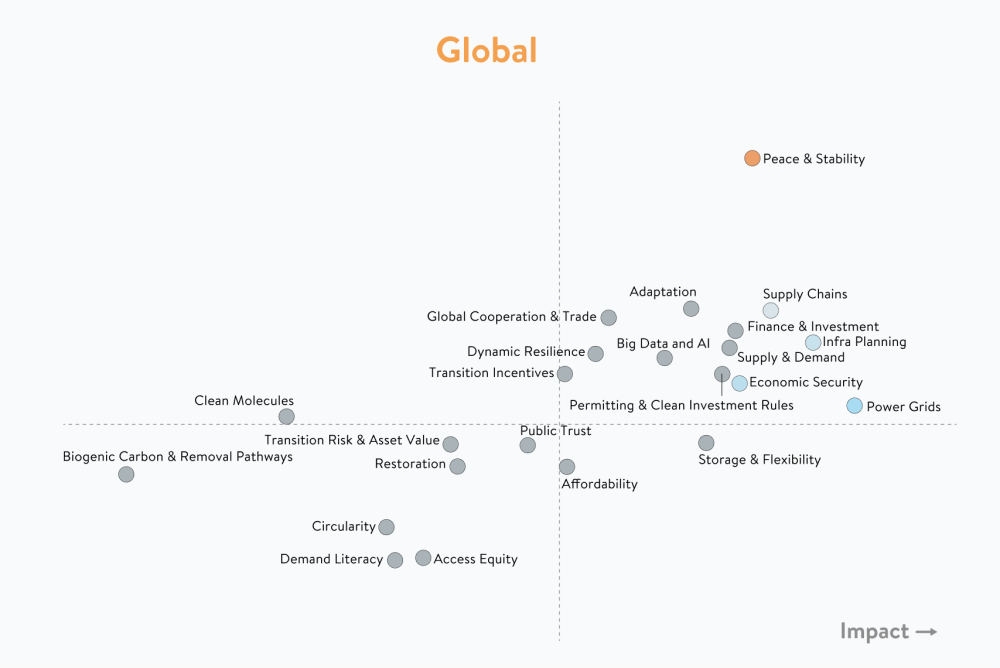
Figure 2. Global Impact and Uncertainty Map 2026


SIGNALS EMERGING ACROSS REGIONS
- Geopolitics has become the defining disruptor. Peace and Stability topped the global list of uncertainties even prior to recent developments across the Middle East and Gulf States. Geopolitical pressure is reshaping investment signals and creating an atmosphere of continuous strain rather than occasional shocks.
- Power System capacity – not ambition – is now setting the pace. Leaders are increasingly focused on preventing systems overload, with grids, permitting, supply chains, and workforce capacity emerging as decisive constraints.
- Power Demand is rising – and misread when reduced to the AI story. Industrialisation, electrification of end–use, mobility, digitalisation, urbanisation and AI are reshaping demand in parallel. As in past eras of population growth, income expansion and technology adoption, multiple structural drivers are compounding rather than substituting for one another.
- Resilience is being tested from within the system. Congestion, curtailment, negative pricing, and interconnection limits highlight systems working harder to absorb the effects of rapid transformation.
- Legitimacy is becoming a practical constraint. Rising costs, unequal benefits, and geopolitical narratives are sharpening debates over who pays, who benefits, and where projects can move forward with confidence.
Together, these signals point to both the risk of transitions stalling and the potential for reversal where constraints and political pressures are at their most acute. Yet investment remains resilient in many markets; showing that even as pressures mount, costs rise, and learning curves advance, so too does progress.
Downloads

World Energy Issues Monitor 2026
Download PDF
World Energy Issues Monitor 2026 (Chinese Translation)
Download PDF
World Energy Issues Monitor 2026 Polecat Addendum
Download PDFEXECUTIVE SUMMARY
REGIONAL COMMENTARIES
COUNTRY COMMENTARIES
Downloads
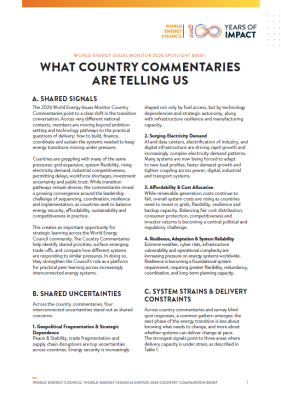
World Energy Issues Monitor 2026 Country Comparison Spotlight Brief
Download PDFRelated Publications

World Energy Issues Monitor | 2025
Published on 05 March 2025
World Energy Issues Monitor | 2024
Published on 02 April 2024