Energy systems transitions just entered their hardest phase — and leadership dialogue is struggling to keep up
This article was originally published by World Eneryg Council Secretary General and CEO Dr Angela Wilkinson on LinkedIn

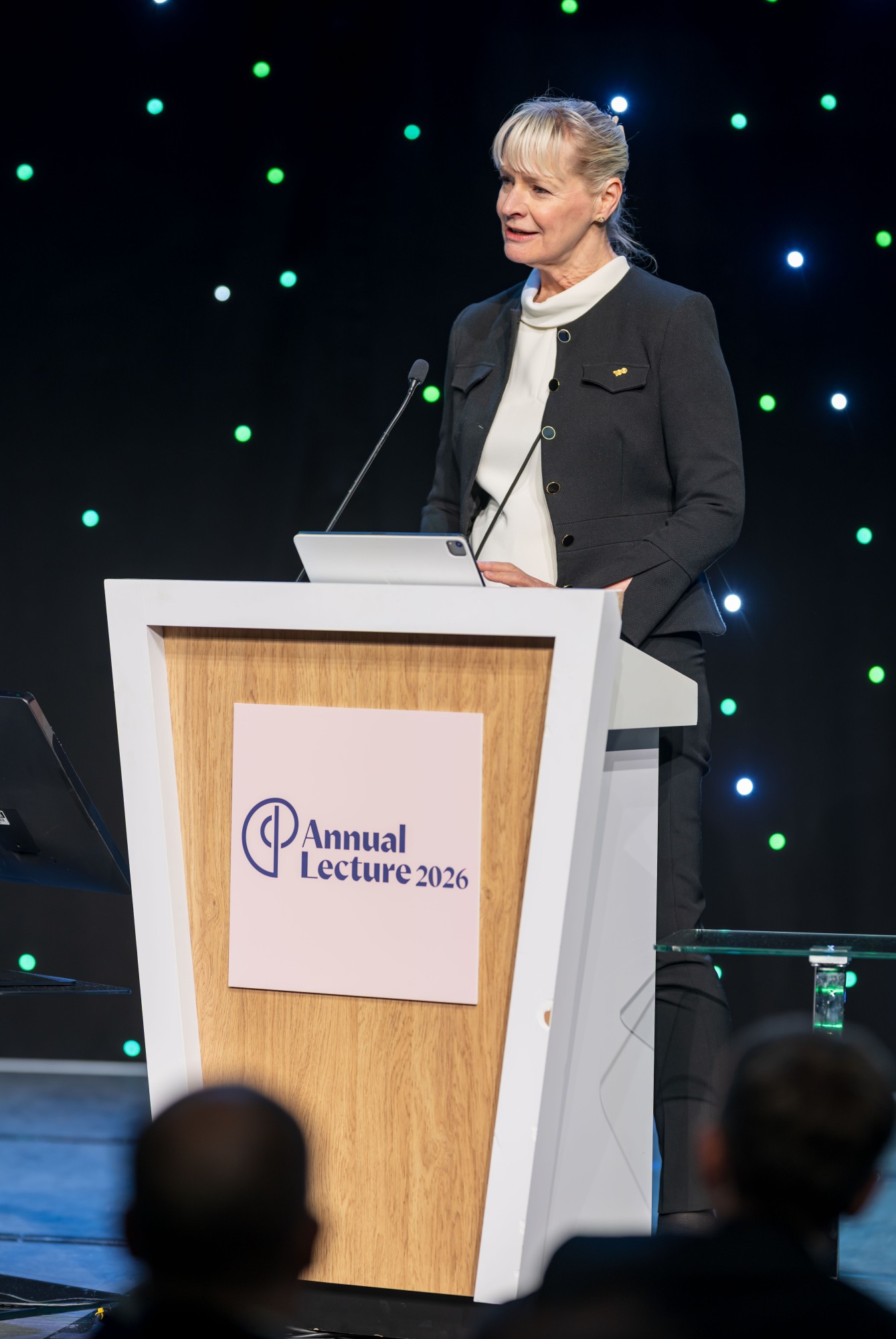
This week I was in Aberdeen, Scotland to deliver the annual Prosper lecture in a city that has powered Europe for half a century.
Before the lecture I participated in a roundtable on the UK energy policy context. What struck me most was the distance from, and growing frustration with, the void in UK energy leadership dialogue.
World energy leadership has become harder as energy systems have grown bigger, more complex and more interconnected over the past century.
Those who know me well will also know my interest in collective leadership as a characteristic of systems health, rather than individual heroics.
Energy leadership dialogue is a process. At its best, it creates space for constructive disagreement, stress-testing choices and informing tough trade-offs through collective leadership learning.
And for century, the World Energy Council community has operated as the infrastructure of trust in convening diverse world energy leadership communities in a living dialogue supported through a connected series of global, regional and national events.
Yet what many around the table sensed was a lack of this dialogue process in the UK.
A void of inclusive, intergenerational leadership dialogue in the UK on how to navigate energy transitions in a fragmented, many-games world.
Everyone senses the shift. The global energy transition is moving from a phase of technology optimism to one of system management.
The easier choices on adding renewable supply have largely been taken.
What remains are harder decisions involving real trade-offs between energy security, affordability and environmental sustainability - what we call the World Energy Trilemma Framework. Investment in systems resilience is also critical.
In practice this means balancing:
- investment in new infrastructure;
- reliable energy supply;
- affordable energy for households and industry;
All at the same time.
Trade-offs do not disappear as new clean power systems scale.
They evolve and are redistributed.
As the shift toward electrification accelerates across the world the need to regularly rebalance priorities and refresh trade-offs is the best way to avoid flip flopping between climate-first, security-first, equity-first politics.
In the UK discussion, five fault lines were surfaced; simplified binaries that risk obscuring the real whole energy systems transformation challenges.
1. Speed vs system coherence
The UK power system is entering a phase where grid capacity, not generation, is the bottleneck.
2. Market design vs state planning
Electricity grids, hydrogen networks and nuclear programmes require long-term coordination beyond markets alone.
3. Investment vs affordability
The UK now has some of the highest electricity prices in the developed world, shaping public tolerance for transition policies and impacting industry.
4. Centralisation vs decentralisation
Digitalisation enables local energy ecosystems — but national infrastructure still carries the system.
5. Climate leadership vs energy security
The US energy dominance strategy and Russia’s weaponisation of gas have pushed many countries toward security-first energy policy. UK energy policy maintains the Paris Agreement and European climate-first frame on energy but risks failing to connect with other regions.
Energy transitions leadership dialogues are not simply about adding new wind and solar power supplies.
They are political and societal choices about how to manage difficult trade-offs under tightening constraints.
And whilst physics still sets the rules of the physical energy flows, Mother Nature holds a set of planetary boundary cards and she doesn’t negotiate.
Which is precisely why the World Energy Trilemma framework remains such a powerful leadership lens.
Not as a static scorecard. But as a dialogue practice — helping leaders rebalance priorities and refresh system-level trade-offs. And creating a bounded space to identify blind-spots - modern energy access, new growth transformations - fiscal, digital, new materials, health, etc.
Next week we launch the World Energy Issues Monitor, an annual flagship survey of what keep energy leaders awake at night and busy during the day.
After months of dialogue across our amazing worldwide energy leadership communities, one clear message is has emerged:
Peace and security are in pole position as the defining uncertainty shaping energy leadership.
Countries everywhere repositioning in the World Energy Trilemma — in real time and under very different constraints.
The global and regional maps support dialogue on deeper insights - revealing both blind-spots and bright-spots about what is working across regions as energy systems transition and electrify.
From Aberdeen I head back to a rapidly electrifying China next week, where the drive to shape energy additions and transitions at home and across other regions continues to reshape the global energy system and leadership landscape.
There too I anticipate the same similar questions to emerge.
Not whether transitions will happen — but how energy systems are being redesigned to manage new trade-offs.
In a fragmented world of many energy games, rebuilding spaces for trusted leadership dialogue matters more than ever.
That is the work the World Energy Council. And I am truly grateful to our persistent, practical and realistically hopeful membership base - a truly inspirational globally inclusive and intergenerational leadership community.
So let me leave you with the question I ended the Prosper lecture with:
Where do you think the world energy system is heading next — and who is stepping up to rebalance priorities and refresh tough trade-offs?
Latest Publications

World Energy Tour #1: South Africa
Published on 18 August 2026
World Energy Issues Monitor 2026 - What Country Commentaries are Telling Us
Published on 24 June 2026
Practicing Trilemma Discipline – Regional Leadership Exchanges Highlights
Published on 16 June 2026
Latest News