FOREN 2026: Adnan Amin's Opening Address
As prepared for delivery at the Opening Address of FOREN 2026.
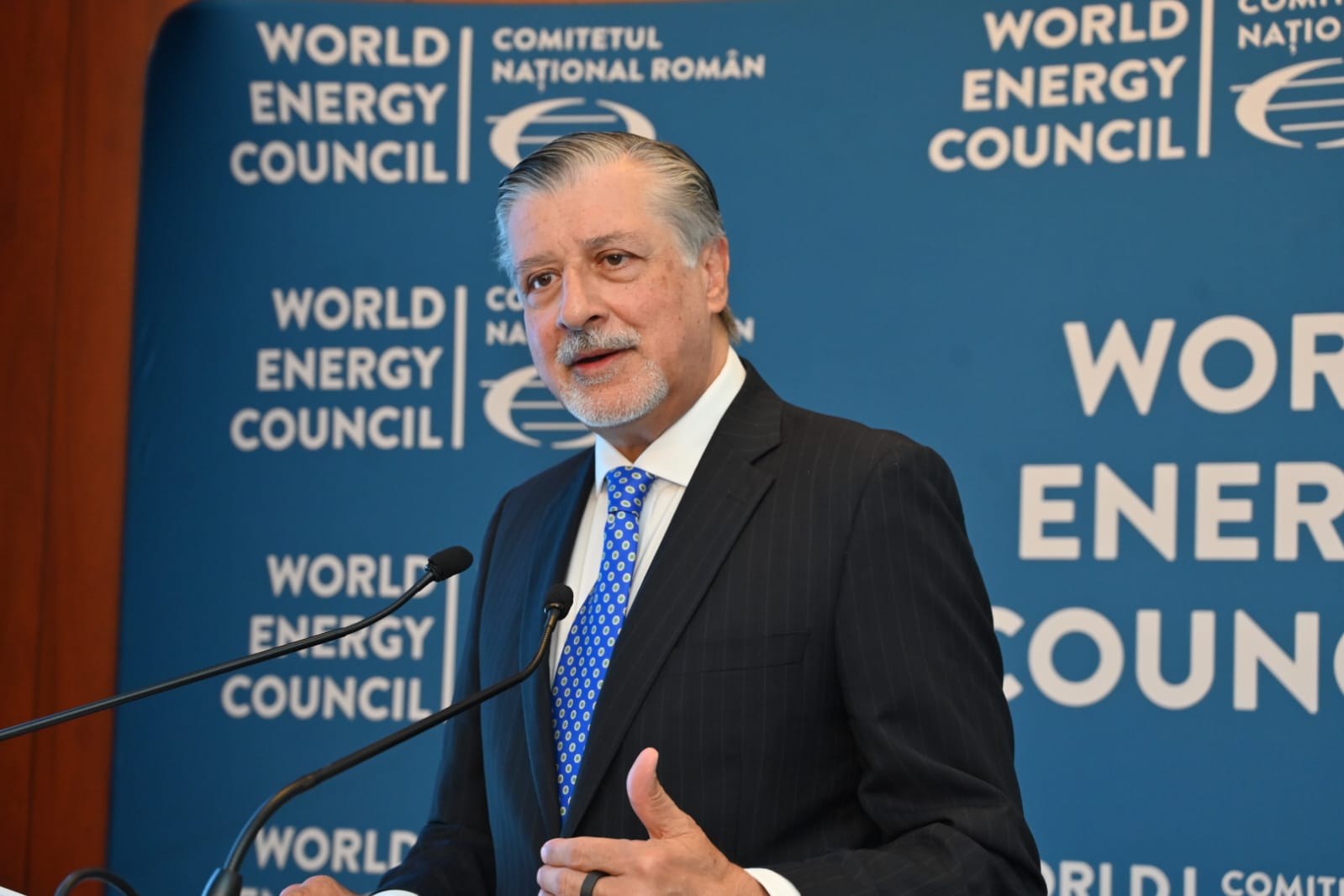
Excellencies, Distinguished Ministers, Industry Leaders, Colleagues and Friends,Good morning. It’s a pleasure to join you at FOREN 2026.
My sincere thanks to the Romanian National Committee of the World Energy Council, the conference organizers, and all who worked to convene this distinguished gathering of energy leaders from Romania, Central and Eastern Europe, and beyond.
It is fitting that we meet in Romania. This country holds a unique place in Europe’s energy story, from some of the earliest commercial oil production to longstanding leadership in hydropower, nuclear energy, and regional cooperation.
The lesson from Romania is clear: successful transitions do not discard the strengths of the past; they leverage them to build the future.
Romania understands this well, and as Europe and the world navigate one of the most consequential periods in energy history, that experience is invaluable.
Ladies and gentlemen,
We meet at a defining moment. The energy transition is no longer a distant dream. In 2025, we reached a historic milestone – clean power met all growth in global electricity demand for the first time.
Renewables supplied almost 34% of global electricity. Global investment in the transition reached about USD 2.3 trillion, roughly double fossil investments.
The world added nearly 700 GW of renewable capacity in a single year – an electricity system larger than many major economies.
These achievements show rapid technology progress, falling costs, and deployment at unprecedented scale.
But the context has changed. Decarbonization is no longer the main driver. Energy security is again at the center of policy. Affordability has become a defining social and political concern. Industrial competitiveness is a strategic priority. Resilience in the face of recent energy shocks now matches efficiency.
Recent events underscore this. The disruption of energy flows through the Strait of Hormuz, normally carrying around one-fifth of global oil consumption and a significant share of LNG, has reminded us that energy security remains fundamental.
More than one billion barrels of supply have already been lost, rising by nearly 100 million barrels each week. Such shocks ripple across supply chains, manufacturing, inflation, investment, and growth, and for Europe in particular.
Security today isn’t only access to fuels; it is resilient infrastructure, diversified supply, flexible power systems, and the ability to absorb external shocks. The transition and security are now one conversation.
At the same time, electricity demand is rising far faster than anticipated. AI, data centers, advanced manufacturing, electrified transport, and digital infrastructure are reshaping consumption.
Many countries now ask not only if they have enough energy, but whether they have sufficient power infrastructure, transmission capacity, flexibility, and resilience to meet accelerating demand.
The question, therefore, is not only how to accelerate the transition, but how to deliver systems that are secure, affordable, sustainable, resilient, and pro-growth. That is harder, and more realistic, because transitions unfold within economic, social, and geopolitical realities.
Nowhere is this complexity more visible than in Europe.
Ladies and gentlemen,
Central and Eastern Europe sit at the intersection of multiple, interconnected transitions: toward lower-carbon systems, greater energy independence and security, modernized infrastructure and regional integration, and stronger industrial competitiveness.
This region connects production and demand centers; links the Black Sea, the Balkans, Central Europe, and wider markets; and is pivotal to Europe’s goals of resilience, diversification, modernization, and competitiveness.
We see major investments in new nuclear generation and exploration of small modular reactors. Development of Black Sea gas resources. Renewables expanding at scale.
Strengthened interconnections and a growing role as a regional provider of security.
These developments matter for Romania, and for Europe. Europe’s future system will depend increasingly on deeper regional integration, modernized grids, and cross-border flexibility.
The World Energy Council’s latest World Energy Issues Monitor finds that power grids and grid expansion are now the top action priority worldwide. This is especially relevant for Central and Eastern Europe, where the next phase of the transition will depend as much on networks and connectivity as on new generation.
In many respects, Europe’s energy security will be determined not only by what countries produce, but by how effectively they connect. No country can build resilience or integrated systems alone.
The challenge is less about technology, and increasingly about managing trade-offs: affordability and sustainability; security and efficiency; speed and resilience; national priorities and international cooperation.
These are leadership questions. They require institutions that foster trust, dialogue, and collective intelligence.
Ladies and gentlemen,
The World Energy Council was founded more than a century ago in the aftermath of global disruption. Our founders understood that energy challenges are too important for division and isolation. They require cooperation and trusted platforms where diverse perspectives engage openly.
That principle is even more relevant today. We face increasing geopolitical fragmentation, more complex political relationships, intensifying economic competition, and diverging energy pathways. Yet the need for collaboration has never been greater.
In this environment, trusted, neutral institutions become strategic assets.
The World Energy Council provides something increasingly rare: a platform for governments, businesses, researchers, investors, innovators, and civil society to engage in open and fact-based dialogue across all energy sources and regions, focused on helping leaders navigate multiple pathways successfully.
In a fragmented world, the Council serves as an infrastructure of trust – independent, impartial, and committed to helping leaders navigate complexity together.
Our network spans more than 100 countries and includes seasoned leaders, institutions, and innovators. Our Member Committees, including highly active committees across Central and Eastern Europe, bridge local realities with global dialogue, grounding international conversations in practical experience and ensuring regional perspectives inform global decisions.
As the energy landscape evolves, so must we. That is why we have launched a Board-led strategic review of the World Energy Council to ensure we remain responsive, relevant, inclusive, and effective.
To strengthen our ability to support leaders navigating uncertainty; to deepen engagement with members and stakeholders; and to sustain the Council as trusted infrastructure for dialogue, collaboration, and collective intelligence for decades to come. The Board will seek strong engagement in this process from Member Committees – as the heart of the World Energy Council system – as we go forward.
Ultimately, our strength lies in people and the willingness to share experiences, challenge assumptions, and work collectively toward solutions. That spirit is alive at FOREN, in Romania, and across this region.
Ladies and gentlemen,
I am optimistic, not because the challenges are small, but because our community repeatedly innovates, adapts, and collaborates in the face of profound change. The systems we build today will shape economic opportunity, social development, and environmental outcomes for generations.
Our responsibility is significant, and so is our opportunity: to build energy systems that are cleaner, more resilient, more secure, more affordable, and more inclusive; to strengthen cooperation at a time of fragmentation; and to ensure energy continues to support prosperity and human development for billions.
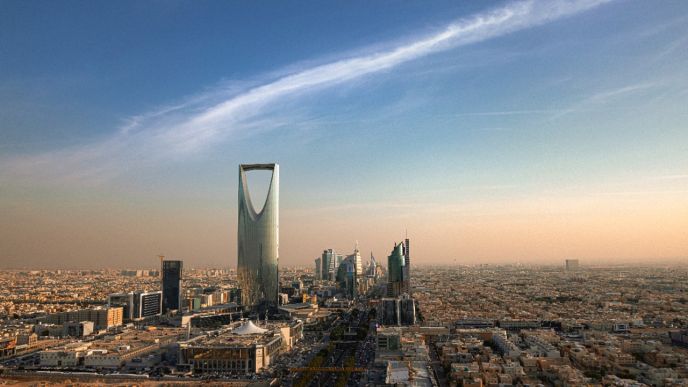
This journey continues next year at the 27th World Energy Congress in Riyadh, under the theme “Inspiring Transformations, Delivering Transitions.”
The Congress will bring together thousands of leaders from government, business, finance, technology, academia, and civil society to shape the future of energy – at a moment when the world needs practical solutions and cross-regional cooperation, and when leadership matters most.
I hope Romania and the wider Central and Eastern European energy community will play a strong, visible role. Your experiences, innovations, and leadership are essential to the next chapter of the global energy story.
Let me conclude with a simple thought.
Our task is not only to build tomorrow’s energy system. It is to maintain the security, affordability, and reliability of today’s system while building what comes next. That requires investment, innovation, and vision.
Above all, it requires cooperation. No nation, company, or institution can navigate this transformation alone.
By working together, sharing knowledge, and building trust across borders and differences, we can deliver a future of more and better energy for all.
I wish you a successful and productive FOREN 2026.
Thank you.
Latest Publications

World Energy Issues Monitor 2026 - What Country Commentaries are Telling Us
Published on 24 June 2026
Practicing Trilemma Discipline – Regional Leadership Exchanges Highlights
Published on 16 June 2026
AI, Data Centres and the Future of Demand – WE Café Discussion Highlights
Published on 16 June 2026
Latest News
 Global